Daily details scatter. Symptoms, sleep, medication timing, activity, and other daily context can be hard to capture consistently.
Now on iPhone and Android
Voice check-ins that prepare Parkinson’s families for every doctor visit.
Your loved one speaks about their day. noongil organizes those self-reported check-ins into a journal, caregiver updates, and a report for the next doctor visit.

Subscription options and any eligible trial are shown in the app before purchase.
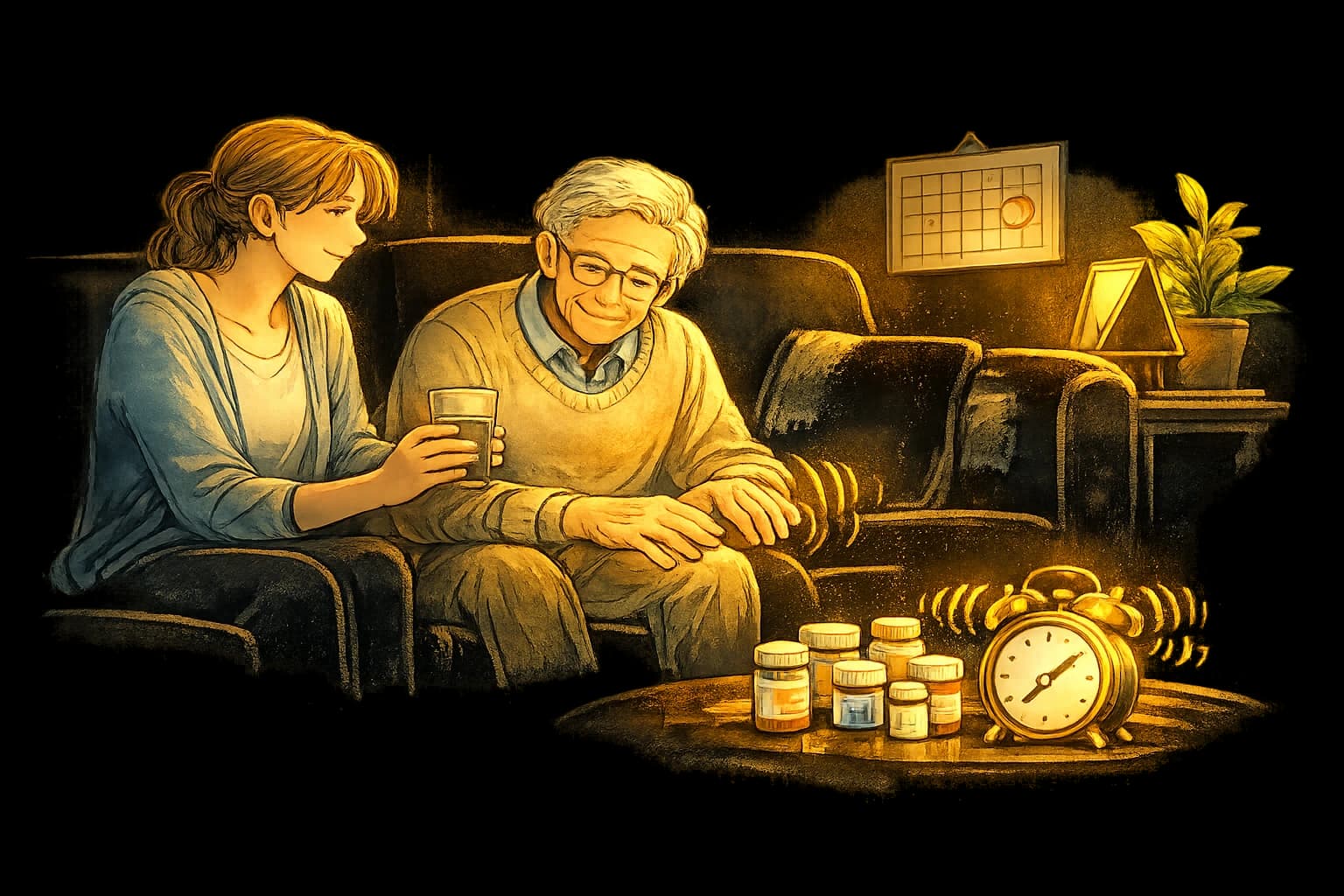
Remember what matters between visits: a one-minute film about voice check-ins, caregiver visibility, and preparing for Parkinson's doctor visits.
Built from lived Parkinson’s caregiving
This started with my dad.

Hi, I’m Amarbayar. My dad has Parkinson’s. Tremor made simple phone tasks frustrating, and our family was constantly trying to remember symptoms, medication changes, sleep issues, other daily context, and what to bring up at doctor visits. I built noongil so families like ours would have a clearer care memory between appointments.
Not built from a generic AI brief. Built from real family caregiving.
Between doctor visits
The home story gets lost.
Parkinson’s care involves day-to-day details: sleep, mood, symptoms, activity, medication timing, and other self-reported context. When those details live in memory or scattered notes, families walk into appointments without the full context.
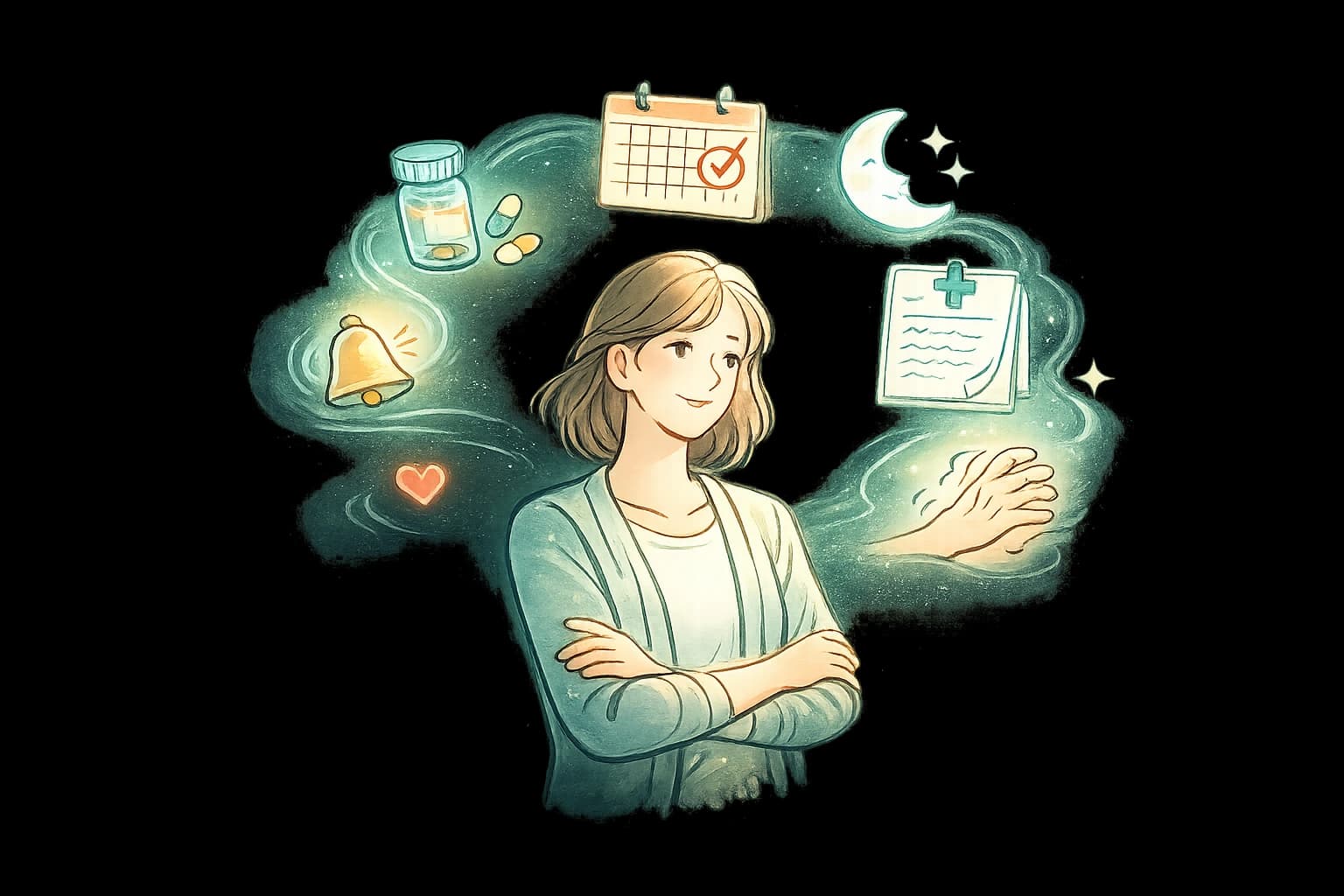
Appointments depend on memory. Families often have to reconstruct weeks of context in a short visit.
Caregivers need visibility, not hovering. A simple voice routine can keep caregivers informed without turning care into constant checking.
How it works
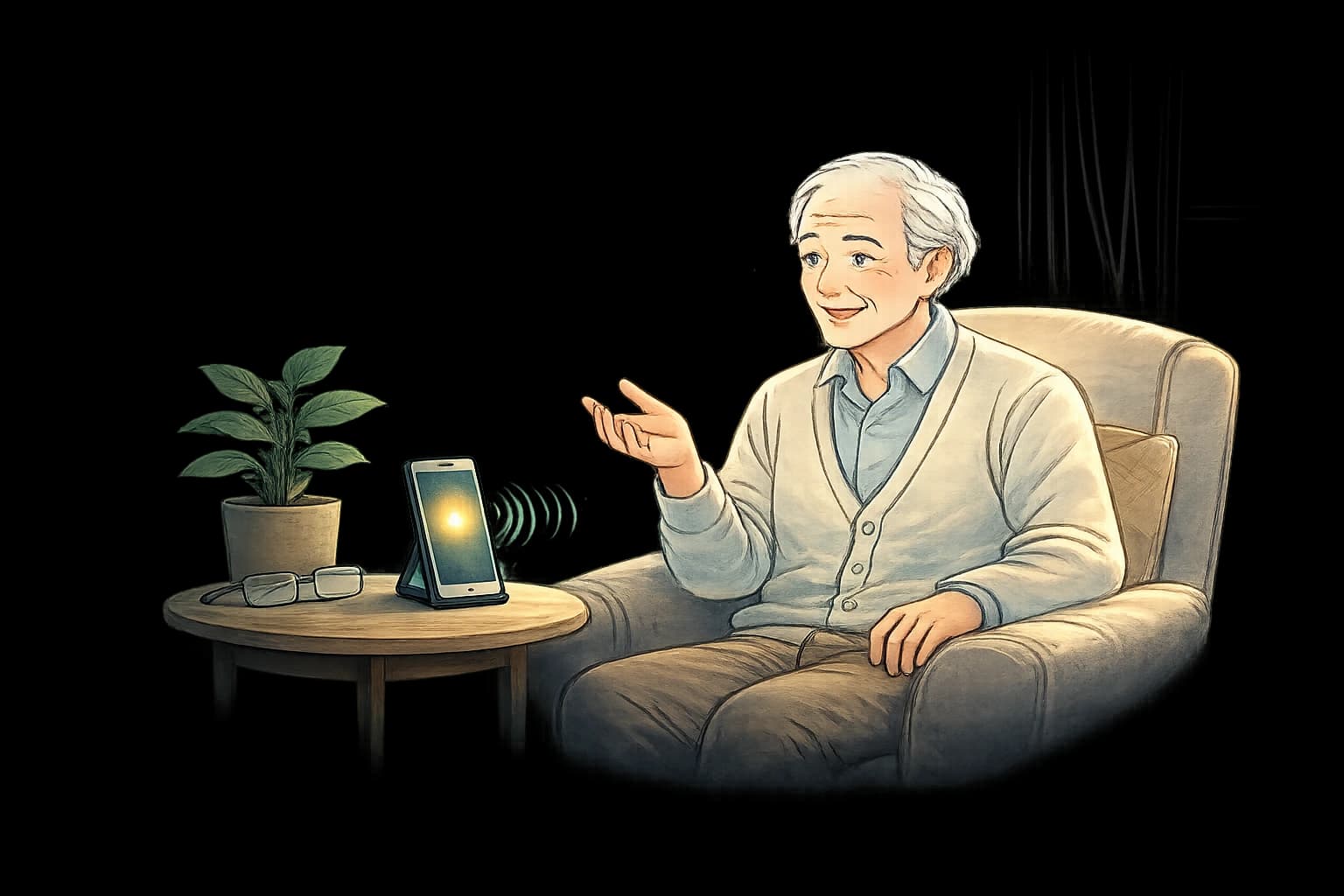
Speak naturally. No forms required.
Noongil turns daily voice check-ins into a care memory caregivers and clinicians can use.
1
Voice check-in
They answer in their own words about sleep, mood, symptoms, activity, medication timing, and other daily context.
2
Care memory
Each check-in becomes a structured journal entry instead of disappearing into memory.
3
Caregiver visibility
Caregivers can review summaries, reminders, and shared entries with permission.
4
Doctor Visit Report
Before appointments, generate a visit-ready summary of recent check-ins and changes worth discussing.
Core check-in signals: sleep, mood, symptoms, activity, medication timing, and other daily context can be recorded in each check-in. Caregivers can add family-specific instructions without losing the information needed for daily records and reports.
Core product
Built around caregiver visibility and doctor-ready reports.
The launch product focuses on the workflow families already struggle with: capture daily context, coordinate support, and prepare for visits.
Voice check-ins
A low-friction way for members to talk through daily care signals without typing.
Caregiver dashboard
A shared view of recent check-ins, reminders, and self-reported changes.
Doctor Visit Report
A visit-ready summary that helps families bring clearer context to appointments.
Reminders and custom instructions
Medication, check-in, and custom reminders, plus caregiver-added topics for the next check-in.
Consent-based sharing · Export and delete controls · Not for emergencies · Not a medical device · Not a substitute for professional care
Recorded-day comparisons
Review daily records side by side.
noongil groups self-reported entries by recorded day and can show simple averages for selected date ranges. The view supports recall and visit preparation without interpreting the reason for a change.
Same-day entries
Feb 94 entries
- Sleep
- 5.5 hours
- Medication timing
- Logged 8:10 AM
- Symptom entry
- Tremor 3 / 5
- Activity
- Short walk
Feb 84 entries
- Sleep
- 6.2 hours
- Medication timing
- Logged 8:05 AM
- Symptom entry
- Tremor 2 / 5
- Caregiver note
- Visit prep added
Entries are placed together only because they share a recorded date.
Period comparison
Recorded measureMar 8–14Mar 1–7
Self-reported mood average7.26.8
Logged sleep average6.4 hrs6.1 hrs
Days with a symptom entry3 of 74 of 7
Days with medication timing6 of 76 of 7
These are comparisons of self-reported logs. They do not explain why symptoms changed and are not medical advice.
Example caregiver view. Real names, dates, and recorded values will vary by family.
These are comparisons of self-reported logs. They do not explain why symptoms changed and are not medical advice.
Recorded days Review sleep, symptoms, activity, and medication timing recorded on the same date.
Period averages Compare simple self-reported averages for selected date ranges.
Visit preparation Choose recorded entries and questions to discuss with a clinician.
Trust and control
Share care context on your terms.

11M+People living with Parkinson’s worldwide
53M+Family caregivers in the U.S.
6Core care signals captured in each guided check-in
Noongil handles sensitive family health context. The product should be clear about what it does: organize self-reported check-ins, support caregiver visibility, and prepare doctor-ready summaries with consent-based sharing and export/delete controls.
A care-continuity product for families, not a diagnosis, treatment, or emergency tool.
Available now
Remember what matters between visits.
Start with a voice check-in. Bring a clearer record to the next doctor visit.
Available on iPhone and Android. Subscription options, local prices, and any eligible trial are shown in the app before purchase.
Noongil organizes self-reported check-ins. It does not provide diagnosis or treatment and is not for emergencies.
FAQ
Things caregivers ask us
Short answers. Plain language.
Is noongil replacing a doctor?
No. noongil helps organize self-reported wellness context for daily check-ins, caregiver awareness, and visit preparation. It does not diagnose, prescribe, treat, monitor emergencies, or replace professional care.
What does my loved one actually do with it?
They speak naturally. noongil is designed to make daily check-ins, reminders, and simple questions possible through voice instead of requiring constant tapping and typing.
What does a normal day with it actually look like?
A caregiver sets things up once. Your loved one gets a reminder or opens the app, responds by voice, and noongil turns that into an updated daily record. The caregiver dashboard then shows shared daily records, reminders, simple date-range comparisons, and visit-ready context.
What do caregivers actually see?
Caregivers can review recent check-ins, reminders, entries grouped by recorded day, simple comparison averages, and Doctor Visit Reports that are easier to bring into appointments.
What does the Doctor Visit Report include?
It summarizes recent check-ins, sleep, mood, symptoms, activities, medication timing, other recorded daily context, and notable changes so families can prepare for care conversations with clearer context.
Can caregivers customize check-ins?
Yes. The goal is to let caregivers add family-specific instructions or topics while noongil still captures the core signals needed for daily records and reports.
What are the core check-in signals?
The guided check-in records sleep, mood, symptoms, activity, medication timing, and other daily context the member chooses to share.
Can it help with reminders and routines?
Yes. The goal is to support everyday routines like medication reminders, custom reminders, check-in reminders, and capturing what changed so less context gets lost between visits.
How private is the information?
noongil should be designed around consent-based caregiver sharing, clear permissions, encryption where applicable, and export/delete controls. We do not sell personal health data.
Can caregivers use it from far away?
Yes. noongil is designed to help family caregivers stay informed even when they are not in the same home.
Will this support languages beyond English?
Voice language options are available in the app. Speech recognition and voice quality can vary by language, speaker, and connection.
Where can I download noongil?
Noongil is available on the App Store for iPhone and on Google Play for Android. Use the download links on this page. Availability depends on your store country or region. Subscription options, local prices, and any eligible trial are shown in the app before purchase.